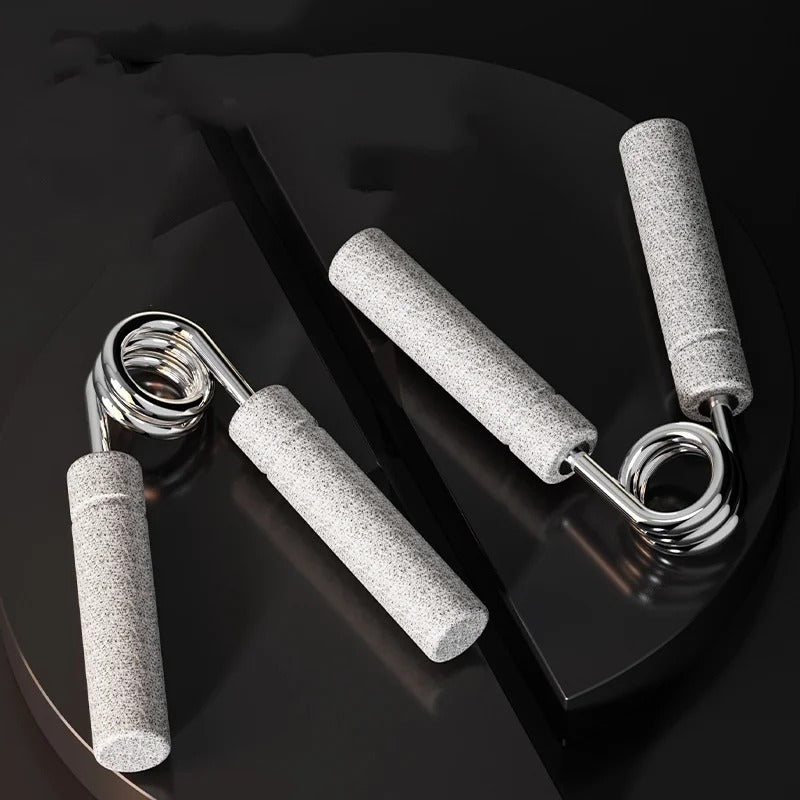
💪 How Often to Use Hand Gripper: The Definitive Guide
Use hand grippers 3x per week if you’re new, 4–5x as you get stronger, and up to daily once your hands recover fast and your tendons feel like cables. Your test is simple: your deadlift shouldn’t slip, your pull-ups shouldn’t peel your fingers open, and your handshake should command respect. If your hands ache nonstop, back off. If they feel soft, push harder. Start now, then push forward to master frequency, recovery, and real crushing force.
Key Takeaways
- Beginners should train with a hand gripper about 3 times per week, focusing on controlled, pain-free reps.
- Intermediates can use grippers 4–5 times weekly, including some harder, low-rep sessions for strength.
- Advanced trainees may use grippers almost daily, if hands fully recover within 48–72 hours and performance stays strong.
- Reduce frequency if you feel constant forearm ache, finger throbbing, inflammation, or your closing strength gets worse.
- Increase frequency gradually if sessions feel solid, recovery is smooth, and your grip strength or endurance improves consistently.
Why Hand Gripper Frequency Matters
You can crush grippers every day and still stay weak if your training is sloppy, random, and fueled by ego instead of structure.
When you lock in a smart grip schedule, your hands hit harder on deadlifts, your choke feels tighter on the mats, and even a firm handshake sends a clear message of dominance.
Stop guessing, set a ruthless plan, and take control of your grip and your life right now.
Research confirms that grip strength serves as a significant biomarker for overall health, correlating with better longevity and reduced mortality rates across populations (Galé et al., 2006; Ortega et al., 2012). This means your gripper work isn't just about crushing steel—it's about building a body that lasts.
Common Training Mistakes That Limit Progress
Most guys don’t fail because their hands are weak; they fail because their training is sloppy, inconsistent, and ego-driven.
You crush hand grippers for random high reps, then wonder why your grip dies on the last deadlift. You chase heavier springs, not stricter form. You skip warmups, then complain about aching elbows.
You hit a grip-strength workout daily, never deload, never log numbers, never progress. Your hands stay soft. Your choke slips in grappling. Your pull-up bar feels heavier. Your grocery bags dig into your fingers.
Stop guessing. Train disciplined. Own your grip. Own your life.
Benefits Of Proper Grip Training Schedule
Consistent sessions sharpen neuromuscular health. Your brain fires faster. Your hands obey instantly. Research shows that regular grip training enhances neuromuscular function, improving the brain's responsiveness and coordination with hand muscles, which translates to quicker reaction times in athletic and everyday scenarios (Rinne et al., 2017; Bojsen‐Møller et al., 2005). Build the schedule. Own your grip. Own your life.
How Often To Use Hand Grippers By Experience Level
| Experience Level | Frequency | Weekly Days | Goal |
|---|---|---|---|
| BEGINNER | 3× per week | Mon – Wed – Fri | Build base + tendon resilience |
| INTERMEDIATE | 4–5× per week | Mon – Tue – Thu – Fri – (Sat) | Push volume + heavy closes |
| ADVANCED | 6–7× per week (daily) | Every day (light on some) | Max crush + daily dominance |
| Signs You’re Ready to Level Up | |
|---|---|
| Beginner → Intermediate | You close your working gripper 15+ times easily |
| Intermediate → Advanced | You’re closing CoC #2 or higher for reps |
| RED FLAGS – Back Off Immediately | |
|---|---|
| • Joint pain that lasts hours | • Weak closes after rest |
| • Tendon clicks or inflammation | • Grip fails on big lifts |
2025 Grip Law:
Frequency matches your level.
Recovery matches your intensity.
Train like a beginner forever if you skip recovery.
Train like an animal when you earn it.
You’re not all on the same battlefield—beginners hammer the gripper 3x per week, intermediates push 4–5x, and advanced lifters crush it daily to sharpen that unyielding, unshakable grip.
Picture ripping a heavy deadlift off the floor without your hands giving out, locking a choke tighter in jiu-jitsu, or hanging from a bar or a rock face while other guys peel off in fear.
Step up to your level, attack your sessions with intent, and take full control of your grip and your life.
Beginners: Starting Your Hand Gripper Journey (3x Per Week)
When you first pick up a hand gripper, treat it like a weapon, not a toy. You’re a beginner, so train three days per week. Hit clear, focused hand grip exercises. Warm up, then crush that gripper for tight sets. Stop before your hand feels fried.
Picture deadlifting without straps. Picture holding a choke longer. Picture hanging from a bar while others drop. That’s grip strength. You’ll feel it opening jars, carrying groceries, shaking hands. You’re building control. You’re building presence.
Three brutal sessions a week. Studies support this approach: beginners emphasizing grip strength should train approximately three times per week, allowing adequate recovery while building foundational strength (Arpaçay et al., 2023; Hazar et al., 2015). No excuses. Own your grip. Own your life.
Intermediate: Advancing Your Grip Strength (4-5x Per Week)
By now, the novice stage is dead and buried, and your grip needs to be treated like a weapon in active duty. You’re training 4–5x per week. That’s deliberate. That’s war.
Crush the gripper hard. Own every rep. Push near failure, then stop. Recover, then attack again. Pair grippers with brutal forearm training—hammer curls, hangs, heavy carries. Add pinch grip holds with plates or blocks to build thumb dominance.
Feel it when you deadlift. When you fight for wrist control. When you climb, carry, or shake a hand.
Take control of your grip. Take control of your life.
Advanced: Maximizing Hand Gripper Results (Daily Training)
Daily gripper work is where grip training stops being “a workout” and becomes part of who you are. You attack the hand gripper every day. You forge crushing strength that carries into everything you do. Heavy pulls. Aggressive grappling. Confident handshakes that end discussions before they start.
- You squeeze through boredom, stress, and doubt.
- You feel forearms burn while others scroll their phones.
- You close steel when others complain about “weak wrists.”
You open jars, dominate holds, and lock on when it matters. Own your hands. Train daily. Take control of your grip and your life.
Optimizing Your Hand Gripper Training Schedule
Your hand gripper schedule must match your life: the weight you pull off the floor, the fists you clench in a fight, the ledges you hang from, and the doors you crush open without thinking.
You’ll know you’re training too often when your hands feel dull, weak, and inflamed, and you’ll know you’re slacking when jars fight back, your deadlift slips, or a handshake doesn’t command respect.
Track these signals, adjust your frequency with intention, and take control of your grip and your life right now.
Factors That Determine Your Ideal Frequency
Frequency isn’t random; it’s a weapon you tune to your body, your schedule, and your goals. Your ideal rhythm depends on recovery, lifestyle, and how hard you chase muscular strength and tendon health. You’re not copying routines. You’re building your own.
- Your job: Heavy lifting, tools, or combat sports demand more frequent, targeted grip work.
- Your training age: Beginners earn strength with fewer sessions; veterans can push volume harder.
- Your priorities: Need brutal crush for deadlifts, climbing, or choking grips? You’ll train more often.
Crush the gripper. Own your schedule. Dominate your life.
Signs You're Using Hand Grippers Too Often Or Too Little
When you push grippers blind, you either burn out or stall like a weak handshake. Your forearm muscles ache constantly, even gripping a coffee mug. Your fingers throb at night. Your closes get weaker, not stronger. That’s overuse.
Too little? You skip sessions, then struggle to crush the same resistance. Your handshake feels soft. Your pull-ups slip. Your deadlift breaks in your hands. That’s neglect.
Healthy training leaves the muscles of the hands tired, not wrecked. Your grip rebounds stronger within 48–72 hours. Dial it in. Train with intent. Command your grip. Command your life.
Frequently Asked Questions
Can Using Hand Grippers Improve My Performance in Other Sports or Activities?
Yes, they can. You’ll improve grip strength, forearm endurance, and hand stability, which helps in climbing, tennis, golf, weightlifting, martial arts, and everyday tasks like carrying groceries, opening jars, and working with tools more efficiently.
Are There Risks of Overuse Injuries From Daily Hand Gripper Training?
Yes, daily hand gripper training can cause overuse injuries. You might develop tendonitis, finger or wrist pain, or elbow issues. Rotate intensity, include rest days, stretch, and stop if you feel sharp or persistent pain.
How Long Should Each Hand Gripper Session Last for Best Results?
Aim for 10–20 minutes per session. You’ll warm up, do 3–5 focused sets per hand, rest 1–2 minutes between sets, and stop once fatigue appears, keeping quality squeezes instead of marathon gripping.
Do Different Hand Gripper Resistance Levels Change How Often I Should Train?
Yes, higher resistance usually means you should train less often. You’ll recover slower, so use heavy grippers 2–3 times weekly. With lighter resistance, you can train 3–5 times weekly, focusing on volume and control.
Should I Warm up or Stretch My Hands Before Using Hand Grippers?
Yes, you should. Do a quick warm‑up: open and close your hands, shake them out, then do gentle finger and wrist stretches. Don’t force it—smooth, pain‑free motion prepares your tendons and reduces strain.
Conclusion
Your grip tells the world who you are. You crush the bar, not just hold it. You ragdoll an opponent’s wrist in a clinch. You hang from a ledge when your feet slip on the trail. You twist off a stuck jar while everyone else struggles. You don’t hope for strength. You build it, rep by rep. Pick up the gripper. Own your training. Tighten your grip. Then tighten your life.
References
Arpaçay, B., Demirdöğen, E., Ulcay, T., Görgülü, Ö., DEMİR, B., KARAOSMANOĞLU, Ş., … & Aycan, K. (2023). The effects of bioimpedance analysis results and upper extremity anthropometric measurements on grip strength in young adults. Düzce Tıp Fakültesi Dergisi, 25(1), 62-67. https://doi.org/10.18678/dtfd.1224576
Bojsen‐Møller, J., Magnusson, S., Rasmussen, L., Kjær, M., & Aagaard, P. (2005). Muscle performance during maximal isometric and dynamic contractions is influenced by the stiffness of the tendinous structures. Journal of Applied Physiology, 99(3), 986-994. https://doi.org/10.1152/japplphysiol.01305.2004
Galé, C., Martyn, C., Cooper, C., & Sayer, A. (2006). Grip strength, body composition, and mortality. International Journal of Epidemiology, 36(1), 228-235. https://doi.org/10.1093/ije/dyl224
Hazar, Z., Eker, L., & Yüksel, İ. (2015). Demographic and anthropometric factors predicting the grip strength and endurance in adolescent tennis players. Turkiye Klinikleri Journal of Sports Sciences, 7(1), 24-28. https://doi.org/10.5336/sportsci.2014-41598
Ortega, F., Silventoinen, K., Tynelius, P., & Rasmussen, F. (2012). Muscular strength in male adolescents and premature death: cohort study of one million participants. BMJ, 345(nov20 3), e7279-e7279. https://doi.org/10.1136/bmj.e7279
Rinne, P., Hassan, M., Fernandes, C., Han, E., Hennessy, E., Waldman, A., … & Bentley, P. (2017). Motor dexterity and strength depend upon integrity of the attention-control system. Proceedings of the National Academy of Sciences, 115(3). https://doi.org/10.1073/pnas.1715617115