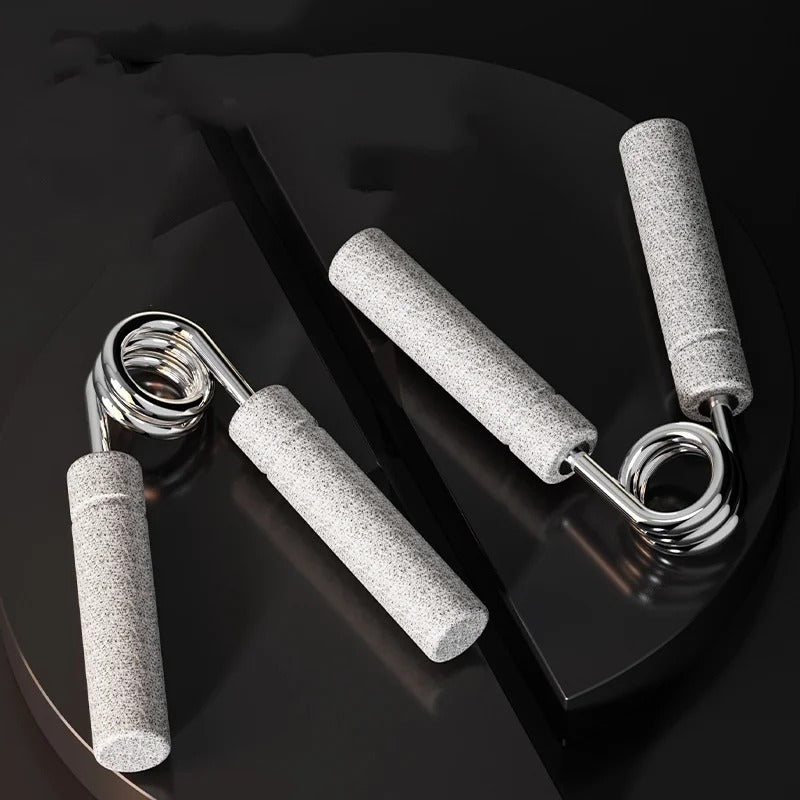
💪 Hand Gripper Routine for Rock Climbers: The Definitive Guide
You crush a hand gripper to break through the wall. Train 15–25 minutes: warm up your fingers, hit heavy 3–5 rep max-effort closes, then burn 20–30 rep endurance sets until your forearms scream. Build open-hand strength, crimp endurance, and pinch control that secures you to tiny holds, rips bars off the floor, and keeps your grip solid in a fight or daily life. Take command of your hands now and liberate the full system behind this.
Key Takeaways
- Start with baseline tests (hangs, squeezes, timed holds) to assess crush, pinch, and support strength, then choose adjustable hand grippers matched to your level.
- Train 3–5 days weekly for 15–25 minutes: warm-up, heavy crush sets for strength, and high-rep sets for endurance specific to climbing demands.
- Prioritize open-hand and half-crimp positions with the gripper, avoiding maximal full crimp to reduce finger pulley strain and climbing injury risk.
- Use progressive overload: increase resistance, add pauses at full closure, extend time-under-tension, and track reps, RPE, and both-hand imbalances.
- Protect tendons with thorough warm-ups, pain-free ranges, rest days, and periodic deload weeks; stop immediately if sharp or persistent finger, wrist, or elbow pain occurs.
Building an Effective Hand Gripper Routine for Climbing Performance
You need a hand gripper routine that matches real climbing grips—crimps, slopers, and brutal lock-offs—not some generic “forearm burn” circus. You’ll assess your current grip strength, choose the right tool, respect safety, and track hard numbers so you don’t wreck your fingers before you ever pull on. Now lock in, own your training, and take control of your grip and your life.
Understanding Grip Types in Rock Climbing and Hand Gripper Benefits
Before chasing V-grades and big walls, grip has to become an obsession. You live or fall by grip types: open hand, half crimp, full crimp, pinch, sloper. Each demands respect. Each exposes weakness. Rock climbing at higher grades places significant physiological demands on grip strength, with each grip type exposing you to distinct injury risks that require targeted training strategies (Watts, 2004; Schöffl et al., 2003). The crimp grip, while powerful, increases your risk of pulley ruptures and finger injuries, which is why balanced grip training across all positions is non-negotiable (Schöffl et al., 2009).
Crush a hand gripper and you train pure dominance. You lock a door with one hand and feel it. You rip a heavy grocery bag off the ground and don’t flinch. You hold a barbell longer than the guy next to you. In a fight, your fingers don’t peel. On the wall, you don’t “hope” to stick. You own the hold. Build your grip. Own your life. Beyond climbing performance, higher grip strength correlates with reduced all-cause mortality and better cardiovascular health, meaning every squeeze you train today builds not just climbing power but longevity (Celis-Morales et al., 2018).
Assessing Your Current Grip Strength and Selecting Appropriate Equipment
Every grip type on the wall means nothing if the raw strength behind it is weak or unfocused. Test your grip strength right now. Hang from a doorframe. Squeeze a grocery bag until the plastic bites. Hold a heavy suitcase without shifting hands. Feel where you fail. Fingers? Thumb? Endurance?
Match your weakness to your tools. Use grip strengtheners that hit crush, pinch, and support grips. Choose adjustable tension so you can’t fake progress. Track reps, holds, and time. Treat every squeeze like a fight. Own your hands, own the climb. Take control of your grip and your life.
Essential Safety Considerations and Baseline Testing
Pain shows up fast when grip work goes wrong, so treat safety like a weapon, not a suggestion. You’re building hand strength for war—on the wall, under the bar, in a fight, in daily life. Warm up fingers, wrists, elbows. No ego. No rushed jumps in resistance.
Run baseline testing first. Max reps with clean form. Record closes, tempo, pain levels. If your fingers twinge, stop. That’s your body screaming. Respect it.
Test both hands. Note imbalances. Protect tendons like steel cables. Own the process. Lock in your numbers. Then attack. Take control of your grip and life. Measuring isometric finger strength using standardized protocols is crucial for assessing climber performance and tracking real progress over time (Torr et al., 2020).
Complete Hand Gripper Training Program for Rock Climbers
–25 min daily routine → fingers that lock crimps, survive overhangs, refuse to fail.
| Phase | Duration | Action |
|---|---|---|
| Warm-Up | 3–5 min | Arm circles → finger flicks → wrist rolls → light open/close with easy gripper |
| Main Work | 10–15 min | Alternate Strength & Endurance days (below) |
| Recovery | 3–5 min | Shake hands → forearm massage → light wrist stretches |
| Strength Day (Mon / Thu / Sat) | Sets / Reps | Notes |
|---|---|---|
| Heavy Closes | 5 sets × 3–5 reps (gripper you can barely close 5×) | Full crush → hold 3 sec → slow negative |
| Negatives | 4 sets × 4–6 reps/hand | Two-hand close → one-hand 5-sec lower |
| Isometric Holds | 3 sets × max time (aim 15–30 sec) | Close & lock — fight to keep shut |
| Endurance Day (Tue / Fri / Sun) | Sets / Reps | Notes |
|---|---|---|
| Volume Closes | 4 sets × 15–30 reps (lighter gripper) | Fast close → controlled open |
| Timed Holds | 4 sets × 20–40 sec hold | Close & burn — no shake out |
| Alternating Hands | 3 sets × 20 switches | No rest between hands |
| Integration with Climbing Schedule | |
|---|---|
| Climbing Days (Hard Sessions) | NO gripper work — full finger recovery |
| Light / Technique Days | Gripper AFTER climbing (15 min) |
| Rest / Off Days | Full 20–25 min gripper session |
| Progressive Overload Rules | |
|---|---|
| Every 2 weeks | Add 2–3 reps OR move to harder gripper |
| Track | Log max closes & hold times weekly |
| Deload | Every 6–8 weeks → 1 week light or off |
2025 Climber Truth:
Weak grip = route failure.
Strong grip = send after send.
15 minutes daily → fingers that never pump out.
Own the gripper. Own the wall. Own your life.
You’re going to run a daily 15–25 minute hand gripper routine with a sharp warm-up, then hammer strength and endurance sets with unyielding progressive overload so your grip owns every hold, every bar, every handshake. You’ll line this work up with your climbing schedule so your fingers don’t just survive sessions; they crush routes, lock onto edges, and back you up in every pull-up, deadlift, and choke. Take control of this program, take control of your grip, and take control of your life.
Daily 15-25 Minute Hand Gripper Routine with Warm-Up Protocol
When your grip is weak, your entire body gets exposed. You feel it on overhangs, deadlifts, even opening a stuck door. You need a ruthless 15–25 minute training plan with hand-held grip strengtheners.
Start with 3–5 minutes of arm circles, finger flicks, and wrist rolls. Wake the joints. Send blood to your forearms.
Then crush. Slow closes. Full opens. Hold the last millimeters. Own every rep.
Finish with quick shakes, forearm massage, and light stretching. Walk away pumped, not fried. Do this daily. Take control of your grip. Take control of your life.
Strength vs Endurance Training: Sets, Reps, and Progressive Overload
Strength without endurance is useless on a long, steep wall, and endurance without strength collapses the second the holds get small and cruel. You need both. Heavy, low-rep gripper work for maximum grip strength. High-rep, burning sets for endurance that refuses to quit.Use progressive overload. Add resistance. Own the hangboard, the bar, the grocery bags, the fight. Close harder. Hold longer. Take control of your grip and your life.
Integrating Hand Gripper Work with Your Climbing Schedule
Even the strongest grip turns useless if you trash your hands the day before a hard project or show up to the gym with cooked forearms. Anchor grippers after your easy climbing days. Protect your sharpest finger strength for your hardest redpoint.
Hit grippers on non-climbing days or after a light climbing session. Never before limit boulders. Never before deadlifts or heavy pulls.
Crush reps, then recover like a professional. Feel it when you open jars, lock a collar choke, or latch a bad crimp.
Own your schedule. Control your training. Take command of your grip and your life.
Advanced Programming and Long-Term Progress Tracking
| Week | Focus | Daily Routine (15–25 min) |
|---|---|---|
| 1–2: Base Building | Habit + form | Warm-up (3 min) → 4 sets × 10–15 reps (light gripper) → isometric holds 3×10 sec → recover |
| 3–4: Load Increase | Strength ramp | Warm-up → 5 sets × 6–10 reps (medium gripper) → negatives 4×4 reps/hand → holds 4×15 sec |
| 5–6: Power Peak | Heavy crush | Warm-up → 5 sets × 3–5 reps (heavy gripper) → clusters 4 sets × (3 reps × 3 with 10 sec rest) → holds 4×20–30 sec |
| 7–8: Domination | Max + endurance | Warm-up → max closes test → 5 sets × max reps (drop set) → timed holds 4×30–45 sec → farmer carries between |
| Progress Tracking Rules | |
|---|---|
| Log Daily | Gripper level | Sets/Reps | Hold time | RPE (1–10) | Notes (pain? pump?) |
| Avoid Mistakes | No ego reps → clean form only No overtraining → if RPE >8 three days → deload |
| Weekly Test | Max closes + longest hold → beat last week or adjust |
| Recovery & Injury Prevention | |
|---|---|
| Post-Session | Shake hands → rice bucket circles → light stretches |
| Daily | Sleep 8 hrs → eat protein + collagen → hydrate |
| Between Sets | Finger extensions (rubber bands) → balance flexors |
| Warning Signs | Joint ache → deload 50 % + add heat/ice |
| Tools | Rice bucket / therapy putty for active recovery |
2025 Climber Law:
Grip doesn't break.
It builds empires.
8 weeks → unbreakable fingers.
Track ruthlessly. Recover brutally. Climb like a beast.
You’re not just squeezing a tool; you’re running a 6–8 week campaign to harden your grip until doors, barbells, and rock holds feel like they belong to you. You’ll track numbers, spot mistakes, and enforce recovery so your hands don’t break down when you’re wrestling a loaded deadlift, fighting for a crimp on a cold wall, or manhandling a heavy carry in daily life. Lock in, own the process, and take full control of your grip and your life.
6-Week Beginner to 8-Week Advanced Hand Gripper Training Templates
When random effort stops working and you’re sick of guessing, you lock into a plan and turn your grip into a weapon. Week 1–2, you build the habit. Light grip training, three days a week. Own the movement. Feel the squeeze. Week 3–4, you raise training load. Heavier gripper. Lower reps. Clean closes. No half reps. Week 5–6, you attack strength. Heavy singles. Cluster sets. Crush the handle like an enemy’s throat. Week 7–8, you peak. Max closes. Timed holds. Farmer carries. Lead falls. Deadlifts. Jars. Doors. Every squeeze dominates. Start today. Take control.
Monitoring Progress and Avoiding Common Training Mistakes
Eight weeks of structured work turns guesswork into authority, but now you need numbers, proof, and discipline or that new strength leaks away. You track everything or you lose it. Open a training notebook. Write sets, reps, gripper level, RPE, and hand. Watch trends, not moods. If performance tanks three sessions in a row, adjust. Lower volume. Guard against injury risk before it owns you. Don’t chase ego closes with sloppy form. Dominate the gripper, don’t wrestle it. Crush door frames, deadlifts, and handshakes. Own the room. Take control of your grip and your life.
Recovery Protocols and Injury Prevention Strategies
After the grind, the war really starts: recovery decides if you get stronger or break. You’re not a machine. You’re a weapon. Treat your hands like it. Tendon injury and finger injuries don’t just hurt. They steal seasons, projects, and strength.Respect rest days. Sleep hard. Shake out tension between sets. Protect your grip like your spine. Take control of your grip and your life.
Frequently Asked Questions
Can Hand Gripper Training Help With Injury Rehabilitation or Only Performance Improvement?
It can help with both, but you’ve got to be careful. Use low resistance, slow reps, and pain‑free ranges. Always follow your therapist’s guidance, progress gradually, and stop if symptoms flare or grip imbalances increase.
How Should I Warm up Before an Intense Hand Gripper Session?
You should warm up with 5–10 minutes of light cardio, then shake out your hands, perform wrist circles, finger flicks, and easy squeezes with a low-resistance gripper, gradually increasing tension before your intense working sets.
Are There Specific Grippers Recommended for Beginners Versus Advanced Climbers?
Yes. You’ll start with lighter, adjustable grippers (around 50–100 lb) to learn smooth, full closes. As you advance, you’ll progress to heavy-duty, rated grippers (150–300+ lb) for max-strength and climbing-specific crushing force.
How Does Hand Gripper Training Differ for Bouldering Versus Sport Climbing?
You’ll train grippers differently: for bouldering, you emphasize maximal crush strength, heavy resistance, low reps, long rests. For sport climbing, you highlight endurance—moderate resistance, higher reps, intervals, and shorter rests to resist pump on long routes.
Can Overusing Hand Grippers Increase the Risk of Elbow or Finger Tendinopathy?
Yes, overusing hand grippers can increase your risk of elbow or finger tendinopathy. You overload flexor tendons, especially if you train daily, use maximal resistance, skip warm-ups, or don’t balance gripping with extensors and rest.
Conclusion
You crush the gripper, you crush the wall. Strong hands change how you lift, fight, shake a hand, open a jar, hold a fall. You either slip… or you hold. That’s the difference. Picture locking off on greasy plastic, or gripping a collar in a real fight. Your grip decides. You’ve got the blueprint. Now own it. Train hard. Track numbers. Refuse weakness. Take control of your grip—and your life—starting today.
References
Celis-Morales, C., Welsh, P., Lyall, D., Steell, L., Petermann-Rocha, F., Anderson, J., … & Gray, S. (2018). Associations of grip strength with cardiovascular, respiratory, and cancer outcomes and all cause mortality: prospective cohort study of half a million UK Biobank participants. BMJ, k1651. https://doi.org/10.1136/bmj.k1651
Schöffl, I., Oppelt, K., Jüngert, J., Schweizer, A., Neuhuber, W., & Schöffl, V. (2009). The influence of the crimp and slope grip position on the finger pulley system. Journal of Biomechanics, 42(13), 2183-2187. https://doi.org/10.1016/j.jbiomech.2009.04.049
Schöffl, V., Hochholzer, T., Winkelmann, H., & Strecker, W. (2003). Pulley Injuries in Rock Climbers. Wilderness and Environmental Medicine, 14(2), 94-100. https://doi.org/10.1580/1080-6032(2003)014[0094:piirc]2.0.co;2
Torr, O., Randall, T., Knowles, R., Giles, D., & Atkins, S. (2020). Reliability and Validity of a Method for the Assessment of Sport Rock Climbers' Isometric Finger Strength. The Journal of Strength and Conditioning Research, 36(8), 2277-2282. https://doi.org/10.1519/jsc.0000000000003548
Watts, P. (2004). Physiology of difficult rock climbing. European Journal of Applied Physiology, 91(4), 361-372. https://doi.org/10.1007/s00421-003-1036-7