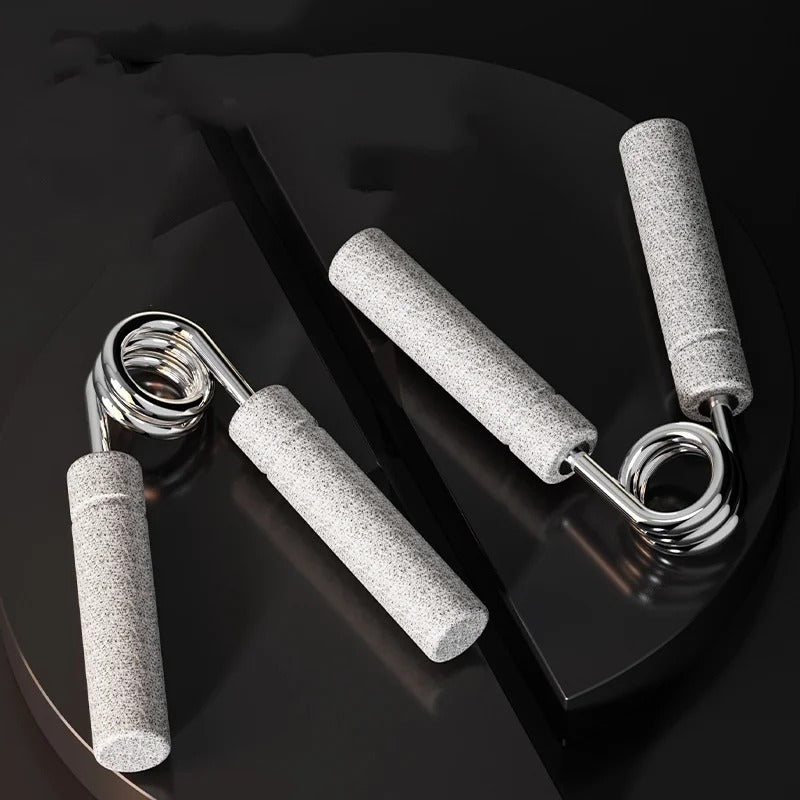
💪 Hand Gripper Exercises for Forearm Strength: The Definitive Guide
Hammer hand gripper exercises to forge forearms that secure deadlifts, fasten chokes, and own every pull-up bar. Hit crushing reps, isometric holds, and high-rep burns. Control every close—no shaking, no cheating. Attack pinch grips to weaponize your thumb for collars, plates, and doors. Track reps, progress load, and respect recovery so your fingers don’t fail when it’s heavy, wet, or violent. Take control of your grip now—and disengage what comes next.
Key Takeaways
- Use standard crush closes with slow negatives to build raw forearm strength and powerful handgrip.
- Perform isometric holds at mid-close to increase grip endurance and finger flexor stability.
- Add high-rep sets (20–30 closes) with lighter tension to improve muscular endurance and carryover to sports and lifting.
- Include pinch grip work using plates, books, or boards to strengthen thumbs and improve overall grip control.
- Progress tension gradually, training 2–3 times weekly, and prioritize warmup, recovery, and pain-free range to protect joints.
Hand Gripper Exercises for Maximum Forearm Development
Your forearms won’t grow by accident—you need the right grip types locked in, the right muscles loaded, and a gripper that actually matches your current strength.
If you pick the wrong tool or repeat the same sloppy reps, you’ll stall out fast, just like the guy whose hands give out on deadlifts, slips off a rope climb, or loses a wrist battle in a fight.
It’s time to train smart, crush harder, and take absolute control of your grip and your life.
Essential Grip Types and Targeted Muscles
Before you crush a heavy gripper, you need to understand exactly what you’re training and why it matters.
Crushing grip builds raw handgrip strength and brutal forearms. You feel it in your fingers, palm, and deep in the flexors. Research confirms what serious lifters already know: grip strength improvement directly correlates with performance in wrestling, climbing, and other demanding physical activities, while also enhancing overall forearm muscular capabilities and endurance (Fryer et al., 2016; Tonak et al., 2021).
Support grip keeps deadlifts, pull‑ups, and carries locked in. You own the bar.
Pinch grip hits the thumb hard. Plates, doors, gi collars—nothing slips.
Finger grip isolates each digit. Grapplers, climbers, fighters depend on it.
Real grip strength means firm handshakes, controlled frames, dominant contact. Train every grip type.
Seize the gripper. Seize your life.
Choosing the Right Hand Gripper for Your Level
Even the strongest man looks weak if he grabs a gripper that owns him instead of one he can command. You choose the tool, or the tool exposes you.
Start with hand grippers you can close cleanly for controlled reps. No shaking. No cheating. You’re building authority, not ego.
Use adjustable grippers to dial tension as your crush improves. Think deadlifts, chokeholds, pull-ups, and carrying heavy loads without your fingers failing.
Picture holding the ledge one second longer. Holding a man’s wrist like iron. Choose your level. Own each close. Then attack the next resistance.
Take control.
Common Training Mistakes That Limit Progress
Most men don’t fail because the gripper’s too heavy. They fail because their approach is weak. You slam reps mindlessly. You chase fatigue, not progress. You never log closes, positions, or time under tension. Your crush grip stalls.
You ignore hand gripper training guides, then wonder why your forearms don’t grow. You death-grip barbells yet can’t fully close a quality gripper. You skip warmups, jump to “hero” springs, and torch your joints.
Then your hands ache when you fight, climb, or carry heavy loads.
Tighten your plan. Respect progression. Own every close. Take control of your grip and life.
Best Hand Gripper Exercises for Forearm Strength
You’re going to build forearms that crush, lock, and hold under real pressure with standard crush closes, heavy negatives, brutal isometric holds, and finger-specific work that makes each digit a weapon.
You’ll feel it carry over when you rip a deadlift off the floor, hang one-armed from a bar, clamp a pinch grip on steel plates, or close your hand fast and hard in a fight, on a rock face, or on a heavy suitcase in a crowded airport.
Now it’s time to attack these gripper drills with intent and take control of your grip, your strength, and your life.
Standard Crush Close and Negative Reps
Drive the handles together. Own the close. Then fight the negative like it’s trying to escape. Slowly. Unyielding.
Picture ripping a deadlift bar from the floor. Controlling an opponent’s wrist in a fight. Locking onto a rock edge. Carrying heavy groceries with zero strain.
Own the gripper. Own your grip. Own your life.
Isometric Holds and Finger-Specific Training
Crush with three fingers. Then two. Then brutal singles. Target pure finger strength. Own finger flexion. Picture deadlifts without slipping. Gi grips that don’t peel. Climbing holds that don’t rip free. Jar lids, steering wheels, chokeholds—total control.
Stop nursing a soft handshake. Attack the gripper. Own your grip. Own your life. Studies show that isometric holds combined with high-repetition endurance training drive the muscular adaptations your forearms need for superior grip control in dynamic sports and daily tasks (Fong et al., 2013; Fan et al., 2019).
High-Rep Endurance and Pinch Grip Transfer
Ever notice how some men never gas out, even when everyone else’s hands are on fire? That’s high-rep gripper work. You don’t just squeeze; you attack each rep. Hit 20–30 clean closes per hand. Rest. Repeat. Feel your forearms burn, but don’t quit. That’s where grip strength hardens.
Now transfer it. Grab plates, books, or thick boards in a brutal pinch grip. Hold until it hurts. Picture deadlifts without slips. Gi grips that don’t surrender. Rock holds that don’t peel. Grocery bags in one trip. Build that endurance. Own your hands. Own your life.
One-Arm Hangs and Explosive Speed Closes
When you hang from one arm, you expose the truth about your grip—no excuses, no hiding.
A one-arm dead hang doesn’t care about your ego. It shows whether you can hold your body or slip. You feel your forearm burn. Your shoulder fight. Your fingers scream. That’s where dominance is built.
Now attack the gripper with explosive speed closes. Crush it fast. Reset. Crush again. Picture ripping a man’s wrist down in a fight. Locking a heavy deadlift. Owning a cliff edge.
This isn’t accessory work. It’s control. Train like this and take back your grip. Then take your life.
Progressive Training Program and Recovery Protocol
Now it’s time to run a 4-week hand gripper progression that hardens your forearms so you crush a barbell, a handshake, or an opponent’s wrist with the same cold control.
You’ll follow strict safety and recovery protocols so your tendons don’t quit before your will does, using targeted forearm recovery to stay sharp for lifting, fighting, climbing, and every pull in real life.
Track your reps, resistance, and time under tension, then push into advanced methods that force your grip to modify or break—now take control of your grip, and take control of your life.
4-Week Hand Gripper Exercise Progression
Most guys crush a gripper once, feel strengthful for five seconds, then stall because they’ve got no plan, no progression, and no respect for recovery. You’re not that guy.
Run a 3‑day‑per‑week gripper program. Treat it like a brutal forearm workout.
Week 1–2: 3 sets of 10 easy closes each hand. Own the pattern.
Week 3–4: Add a fourth set. Slow every rep. Increase muscle time under tension.
Week 5–6: Use a tougher gripper. Hit 5 sets of 5. Progressive overload protocols like these—gradually increasing resistance and incorporating structured high-repetition sets—have been shown to produce substantial improvements in grip strength and muscular endurance retention (Rus et al., 2005; Fan et al., 2019).
Grip harder. Lift heavier. Fight stronger. Climb faster.
Take control of your grip and your life.
Safety Guidelines and Forearm Recovery Techniques
| Phase | Action | Purpose |
|---|---|---|
| Post-Set | Shake out hands Light stretch + wrist circles |
Flush tension Reset blood flow |
| Evening | Forearm massage (roller or hands) Warm shower or heat pack |
Restore tissue Speed recovery |
| Off-Day | Very light curls (empty hand or 1–2 kg) Reverse wrist curls |
Maintain flow Active recovery without load |
Recovery isn’t optional.
It’s how you get stronger.
Skip it → weak grip forever.
Own it → unbreakable hands.
Heavy gripper work hits hard, but if you ignore recovery, your forearms will revolt and your progress dies fast. Respect pain. Back off when tendons throb or fingers tingle. Guard wrist stability with tight wrists, straight knuckles, no sloppy twists.
Use forearm recovery like a weapon. Shake out tension. Massage flexors and extensors. Stretch after every assault on the grippers. Contrast hot water and cold. Sleep heavy. Eat like a man who lifts.
Own your recovery. Own your grip. Own your life.
Tracking Progress and Advanced Training Methods
When you start treating your grip like a mission, you stop guessing and you start winning. You track every rep, every set, every click of those performance springs. You log holds, max closes, and time under tension. You feel dominance rise as numbers climb.
Run heavy days, volume days, and brutal holds. Crush a stress ball on deload days to keep blood moving. You notice doors feel lighter. Barbells obey. In a fight, wrists don’t fold. On a climb, fingers don’t quit. You own the handshake. Own the weight. Own yourself. Start now. Tighten your grip.
Frequently Asked Questions
Are Hand Gripper Exercises Safe for People With Elbow or Wrist Tendonitis?
They’re usually not safe during active elbow or wrist tendonitis flare‑ups. You risk aggravating inflammation. Check with a clinician, start pain‑free, use light resistance, slow reps, neutral wrist, and stop immediately if symptoms increase.
How Do Hand Grippers Affect Rock Climbing or Grappling Performance?
They boost finger and crush strength, so you’ll grip holds and collars tighter and longer. But they’re limited: you still need open-hand, pinch, lock-off, and pulling strength from climbing or grappling-specific drills to see real performance gains.
Can Hand Gripper Training Worsen Carpal Tunnel Syndrome Symptoms?
Yes, it can worsen symptoms if you already have carpal tunnel. You repeatedly increase pressure in a tight space. You should ease intensity, monitor numbness or pain, and talk to a clinician before continuing.
What Warm-Up Routines Should I Do Before Heavy Gripper Sessions?
You should mobilize wrists, fingers, and elbows, then lightly activate forearms. Do wrist circles, prayer stretches, finger extensions with rubber bands, gentle open–close fist reps, light gripper sets, and forearm stretches, stopping if you feel tingling or pain.
How Should I Adjust Hand Gripper Use Around Manual Labor Jobs?
You should treat labor days as grip training, so cut gripper volume, keep only light rehab sets, and prioritize recovery. On lighter workdays, train harder; after brutal shifts, skip grippers, stretch, and monitor elbow or tendon soreness.
Conclusion
Your grip tells the truth about you. Weak hands, weak presence. Strong grip, instant respect. You crush the bar, rip weight off the floor, and your forearms don’t shake. You lock a choke, control the clinch, and the other guy feels it. You hang from a ledge, climb, carry, and never lose hold. No excuses. Pick up the gripper. Squeeze harder. Own your grip. Then own everything it touches.
References
Alomari, M., & Welsch, M. (2007). Regional changes in reactive hyperemic blood flow during exercise training: time-course adaptations. Dynamic Medicine, 6(1). https://doi.org/10.1186/1476-5918-6-1
Alomari, M., Mekary, R., & Welsch, M. (2010). Rapid vascular modifications to localized rhythmic handgrip training and detraining. European Journal of Applied Physiology, 109(5), 803-809. https://doi.org/10.1007/s00421-010-1367-0
Anakwe, R., Huntley, J., & McEachan, J. (2007). Grip strength and forearm circumference in a healthy population. Journal of Hand Surgery (European Volume), 32(2), 203-209. https://doi.org/10.1016/j.jhsb.2006.11.003
Fan, S., Cepek, J., Symonette, C., Ross, D., Chinchalkar, S., & Grant, A. (2019). Variation of grip strength and wrist range of motion with forearm rotation in healthy young volunteers aged 23 to 30. Journal of Hand and Microsurgery, 11(2), 88-93. https://doi.org/10.1055/s-0038-1676134
Fong, S., Guo, X., Cheung, A., Jo, A., Lui, G., Mo, D., … & Tsang, W. (2013). Elder chinese martial art practitioners have higher radial bone strength, hand-grip strength, and better standing balance control. ISRN Rehabilitation, 2013, 1-6. https://doi.org/10.1155/2013/185090
Fryer, S., Stoner, L., Stone, K., Giles, D., Sveen, J., Garrido, I., … & España‐Romero, V. (2016). Forearm muscle oxidative capacity index predicts sport rock-climbing performance. European Journal of Applied Physiology, 116(8), 1479-1484. https://doi.org/10.1007/s00421-016-3403-1
Rus, R., Ponikvar, R., Kenda, R., & Buturović‐Ponikvar, J. (2005). Effects of handgrip training and intermittent compression of upper arm veins on forearm vessels in patients with end‐stage renal failure. Therapeutic Apheresis and Dialysis, 9(3), 241-244. https://doi.org/10.1111/j.1774-9987.2005.00263.x
Tonak, H., Kara, Ö., & Şahın, S. (2021). Correlation of hand functionality and grip strengths with anthropometric measurements. Work, 69(1), 187-195. https://doi.org/10.3233/wor-213468